
Bathrooms present some of the highest risks for slips and falls in the home. Wet surfaces, tight spaces, and the physical movements required to step into a bathtub or maneuver around fixtures can become increasingly challenging over time.
What may have once been a minor inconvenience can eventually become a serious safety concern.
Many homeowners begin considering bathroom modifications after experiencing: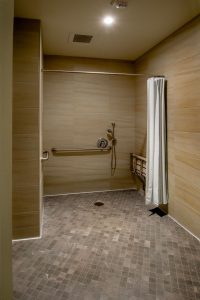
- Difficulty stepping over a bathtub wall
- Balance concerns while showering
- Limited mobility following surgery
- Arthritis or joint pain
- Reduced strength or flexibility
- Concerns about future aging in place
- Caregiver assistance needs
In many cases, making changes before a crisis occurs can significantly improve both safety and quality of life.
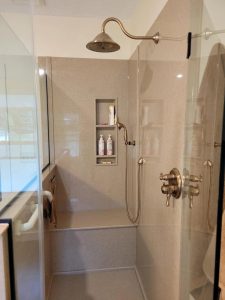 One of the most common bathroom modifications we perform is converting a traditional bathtub into a walk-in shower.
For many homeowners, stepping over the side of a bathtub becomes increasingly difficult and potentially dangerous. A walk-in shower eliminates this obstacle and creates easier access for daily bathing.
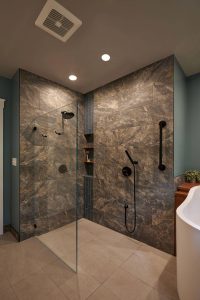
Today’s walk-in showers can be customized to meet a variety of needs while maintaining an attractive appearance. Features often include built-in seating, handheld shower heads, recessed storage niches, slip-resistant flooring, and strategically placed grab bars.
Many homeowners are surprised to discover that an accessible shower can also become one of the most attractive features in the bathroom.
If you’re comparing the benefits of showers and tubs, our article “Walk-In Shower vs. Bathtub: Which Is Right for Your Bathroom Remodel?” provides additional information.
When many people hear the term “grab bar,” they immediately picture the stainless-steel bars commonly found in hospitals and commercial facilities.
Today’s grab bars are very different.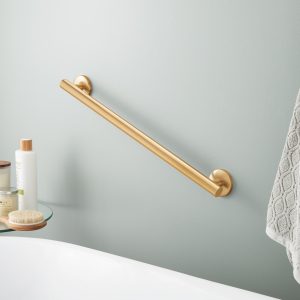
Manufacturers now offer designer grab bars in a wide range of finishes and styles that coordinate beautifully with faucets, shower fixtures, and cabinet hardware. Available in finishes such as matte black, brushed nickel, bronze, and chrome, they can blend seamlessly into the overall design of the bathroom.
Even a simple addition of strategically placed grab bars can provide greater stability and confidence while using the shower, bathtub, or toilet area.
For some homeowners, this may be the only modification needed to make the bathroom significantly safer.
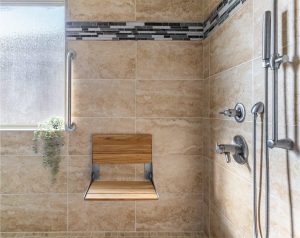 Standing for extended periods can become difficult for individuals with mobility limitations, balance concerns, or chronic health conditions.
Built-in shower benches provide a comfortable place to sit while bathing and can be incorporated into both custom tile showers and low-maintenance shower systems.
Many homeowners choose benches simply for convenience, but they can become particularly valuable when physical abilities change over time.
When integrated into the overall design, benches often enhance both the functionality and appearance of the shower.
 As homeowners age, reducing maintenance responsibilities often becomes an important consideration.
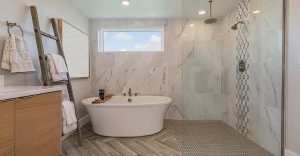
Many clients choose solid-surface shower systems such as ONYX or Swanstone because they minimize grout lines and simplify cleaning. These products provide durable, attractive surfaces that require less upkeep than traditional tile installations.
For homeowners who want a beautiful shower without the maintenance demands of extensive grout cleaning, these systems can be an excellent solution.
Our article “ONYX, Swanstone, or Tile? Choosing the Right Shower Material for Your Bathroom Remodel” explores these options in greater detail.
Manufacturer Resources:
 When discussing accessibility, many homeowners focus primarily on safety. However, comfort also plays an important role.
Heated flooring has become a popular upgrade because it helps eliminate cold tile floors, particularly during Illinois winters. For individuals dealing with arthritis, circulation issues, or general discomfort, warm flooring can make the bathroom feel significantly more comfortable.
While heated floors are often considered a luxury feature, many homeowners view them as an investment in everyday quality of life.
Learn more in our article, “Are Heated Bathroom Floors Worth It? What Homeowners Should Know.“
 A bathroom remodel is about more than updating finishes or following the latest design trends. For many homeowners, it is about maintaining independence, improving safety, and creating a space that supports changing needs without compromising comfort or dignity.
Whether the project involves a simple grab bar installation, a bathtub-to-shower conversion, a barrier-free shower, or a complete bathroom renovation, thoughtful design can make a meaningful difference in everyday life.
The best accessible bathrooms are the ones that feel natural, beautiful, and comfortable while providing the support homeowners need today and in the years ahead.
If you’re considering a bathroom remodel to improve accessibility, safety, or long-term comfort, careful planning and professional design can help create a space that works for your current needs while preparing for the future.